
HK Primary Interview editorial content · Updated:
The examples and exercises below are illustrative material, not real student case studies or school test questions. Use them for family preparation; check each school’s current requirements before submitting documents.
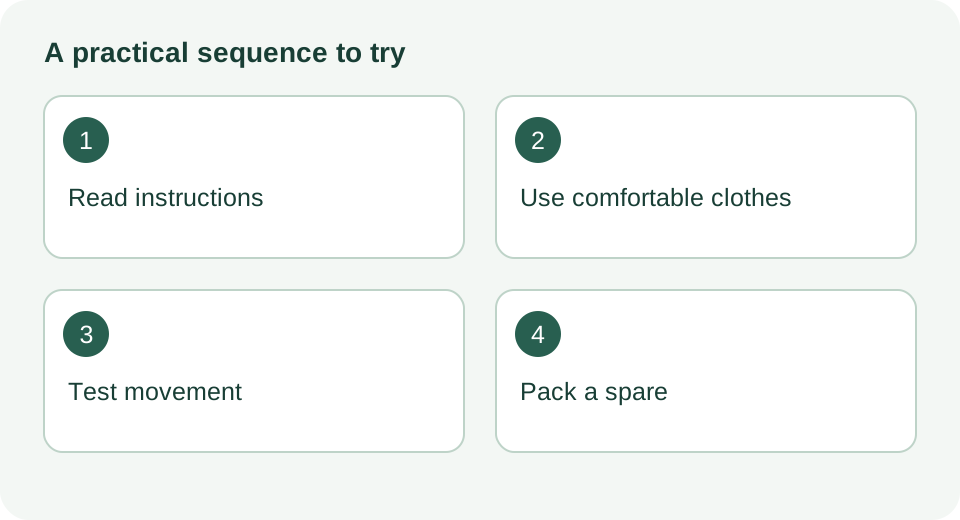
The Core Principle: Familiar, Comfortable, Neat
The single most useful rule: your child should wear something they have already worn at least once, that they can move in freely, and that is clean and in good repair. New shoes, stiff collars, tight waistbands and scratchy lace are the enemies of a calm thirty minutes. A child tugging at a hem or shifting in painful shoes has one more thing to worry about on an already unusual day.
Be honest about what clothing cannot do. We are not aware of any official Hong Kong dress code for admission interviews, nor of any published criteria rewarding particular outfits. Treat claims that certain clothes 'make the right impression' as marketing, not fact.
Editorial default, not a rule: a plain solid-colour top with dark trousers, a knee-length skirt with shorts or leggings, or a simple dress with leggings, paired with closed-toe shoes the child has walked in before, covers every plausible situation. If your family owns nothing like this, do not rush to buy; later sections show how to work with a kindergarten uniform or everyday clothes.
Start With the School's Own Instructions
Before choosing anything, read every page of the notice, letter or email the school sent you. Some schools give specific guidance, some ask children to attend in their kindergarten uniform, and some do not interview at all. The school's own instructions always outrank any general advice, including this guide. If the notice is unclear, phone the school office and ask one direct question: are there any clothing or document requirements for the interview day? If you are still researching schools, our directory at /school/ can help you find contact details. Not every school interviews applicants or accepts portfolios; if a document is genuinely requested, you can assemble a simple PDF at portfolio creator using a parent email address, with no login required, and print it on clean paper.
One more reason to check the notice: it usually states the waiting arrangement. Knowing whether you will wait in a hall, a covered playground or outdoors changes your clothing decisions more than any style advice, which is why the scenarios later focus on waiting conditions, journeys and weather rather than fashion.
Further reading: www.edb.gov.hk
The Reuse-Wardrobe Matrix: Shop From Your Own Drawers First
Most families already own suitable clothing, and familiar clothes are a genuine advantage because the child knows how the outfit behaves after a wash. Lay out what you have and check it against the matrix below. The tradeoff: a slightly worn but comfortable item almost always beats a brand-new but untested one, which can surprise you with a scratchy label or sticky zip.
- Rule of thumb: if an item has never left the house, it should not make its first trip to an interview. Fix loose buttons and hanging threads the night before, or swap the item out.
- If nothing suitable exists, one inexpensive plain outfit is enough. There is no evidence that expensive clothing helps, and budget pressure should never shape this decision.
| Item you probably already own | Why it usually works | Watch out for |
|---|---|---|
| Plain solid-colour T-shirt or polo shirt | Comfortable, familiar, no fussy fastenings; dark or muted colours hide travel creases | Large cartoon prints can invite self-consciousness; check for stretched necklines |
| A collared shirt worn to a family dinner | Looks neat without being costume-like | Stiff new collars chafe; wrist buttons distract during writing or play |
| Knit jumper or cardigan over the usual top | Easy to remove if warm; useful air-conditioning insurance | Itchiness of low-wool-content knits; test on bare arms first |
| Dark trousers or joggers with a stretch waist | Allow sitting cross-legged and easy toilet trips | Overly long hems that catch underfoot; drawstrings that need re-tying |
| Knee-length skirt or dress with shorts or leggings | Modest for floor sitting and low steps | Slippery linings that ride up; tights that slide down |
| Kindergarten uniform, if in good condition | Instantly familiar; some schools explicitly suggest it | Outgrown, faded or stained pieces are better replaced by clean everyday clothes |
Shoes and the Five-Move Check
Shoes deserve their own decision because interview days involve more movement than parents expect: walking from transport stops, possibly stairs, waiting, and activities that may include floor sitting or moving between tables. Closed-toe shoes with a secure fastening are the safest editorial default, and brand-new shoes are a fully avoidable mistake. A shoe worn for at least a week of normal life is a known quantity; a shoe straight from the box is not.
A worksheet: the five-move check, with exact wording
Do this at home, in the actual outfit, two or three days before, in a light, game-like voice. Tick each move only if the child completes it without adjusting clothing or complaining. Move 1, walking: "Let's walk to the corner and back like we're going somewhere important" — watch for stumbling hems, slipping shoes or changed gait. Move 2, sit-stand three times: "Can you sit down and stand up, three times fast?" — exposes tight waistbands and creaky shoes. Move 3, a full squat: "Show me how you crouch down to pick up your bag" — floor activities demand this range. Move 4, one flight of stairs up and down, hand on rail — reveals slippery soles and loosening laces. Move 5, both arms raised: "Reach up tall like you're catching a bubble" — tight shoulders or ride-up trousers show immediately.
If any move fails, do not negotiate with the outfit on the day. Swap the failing item for its most familiar alternative and repeat the check. If every alternative fails for sensory or physical reasons, that is a valid outcome: prioritise your child's actual comfort over any imagined standard, and see the sensory section below.
Sensory Comfort and Respectful Adaptations
Some children find ordinary clothing genuinely uncomfortable: labels feel like insects, seams like ridges, elastic like a trap. An interview day amplifies small irritations, so remove or neutralise the irritant in advance, and never spend the child's limited patience forcing an outfit they hate.
Fabrics, fastenings and the night-before sweep
As an editorial guideline, soft washed cotton jersey, well-worn knitwear and stretch fabrics behave predictably, while stiff denim, scratchy lace, tulle and new synthetic linings are frequent offenders. Prefer wide soft waistbands to belts, pull-on styles to fiddly buttons, and short or three-quarter sleeves. Layer a cardigan the child can remove independently rather than one heavy item.
Two or three days before, ask directly: "Does anything in this outfit poke or scratch you?" Many children will not mention this unless asked. Remove or fold away scratchy labels, turn outward seams that press, and check sock elastic and hair ties leave no deep marks after ten minutes of wear.
When your child needs a different adaptation
Children with disabilities, sensory processing differences, medical needs or strong clothing preferences should wear what genuinely works for them: soft-seam clothing, clothing designed for seated positions, a favourite compression layer, or simply a well-loved everyday outfit. No family owes anyone an explanation, and asking a school about accommodations is a normal, reasonable request. If a school's notice contains any requirement conflicting with your child's disability or medical needs, contact the office in advance about a reasonable adjustment. Our guidance is general information, not medical or therapeutic advice; direct specific questions to the professionals who know your child.
Four Hypothetical Situations and How the Outfit Changes
The following four situations are entirely hypothetical and fictional, created for illustration only. They are not predictions, and your actual day may combine elements of several. Each shows the same core outfit adjusted for conditions rather than replaced.
Hypothetical situation A: a hot, humid morning with a fifteen-minute walk
In this fictional scenario, a family walks about fifteen minutes in high heat and humidity, and the child arrives sweating in a long-sleeved outfit chosen for the air-conditioned hall. Better plan: light short sleeves for the journey, with the knit cardigan folded in the bag to put on only if the waiting area is cold. A spare top allows a quick change before entering, and a small towel or tissue pack handles the last five minutes. Tie hair back if the child tolerates it, since sweaty hair bothers some children.
Hypothetical situation B: a long standing-heavy journey on two trains and a bus
In this invented scenario, the journey takes nearly an hour with standing room only. The risk is not heat but fatigue, creasing and shoes. Wear the most cushioned familiar shoes rather than the prettiest, choose trousers or leggings over anything that creases or rides up while standing, and keep layers simple because managing a coat on a crowded train is its own stress. Build in buffer time and treat the final stretch as calm walking, not a run in best shoes.
Hypothetical situation C: a stepped entrance with no lift and a wheelchair user
In this fictional scenario, the route includes steps and no lift, and the child is a wheelchair user. Clothing priorities shift towards what works while seated and transferring: nothing bunched at the back, a jacket that drapes rather than bunches, and a rain layer that goes on and off without a full transfer. The wider point applies to any accessibility need: call the school office beforehand, describe the route concern, and ask which entrance and waiting area the school suggests. Many schools will simply direct you to an accessible entrance when asked; you lose nothing by asking early.
Hypothetical situation D: a sudden downpour thirty minutes before arrival
In this invented scenario, heavy rain starts just as the family leaves home — the situation the rainy-day spare kit exists for. Protect the shoes and top layer, because wet feet and a damp collar cause the most prolonged discomfort. Boots or the most waterproof familiar shoes for travel, with dry socks and the interview top carried in the bag and changed on arrival, turn a disaster into a minor delay. Never let an interviewer-facing outfit walk through a downpour when it could ride in a bag.
The Rainy-Day Spare Kit
Teach the routine in one sentence before the day: "If we get wet, we go to the toilet, dry our feet, put on dry socks and the dry shirt, and then we walk in." Rehearse the sentence, not the emergency. On the day, if rain hits, use the time buffer in your journey plan rather than arriving soaked and early.
- One spare top for the child, in the interview outfit's colour family, folded flat
- One spare pair of dry socks
- A small towel or pack of tissues for faces and hands
- A comb or brush and any hair ties the child already uses
- A folding umbrella sized for adult-plus-child coverage, or two light ponchos
- A plastic bag for wet items so the dry things stay dry
- A small water bottle and one familiar quiet snack for the waiting period
What Parents Wear, and the Practice-Run Checklist
Parents: religious dress, head coverings and modest dress are entirely normal and entirely your right. Budget is irrelevant to suitability — clean and well-fitting beats new and expensive, and no family should spend money it does not have. Bring a bag that closes, with the notice, any requested documents, a pen and the rainy-day kit. Tradeoff to weigh: very formal adult clothing can make the morning feel heavier for a nervous child; a familiar smart-casual outfit signals an ordinary, manageable day. If two or more adults attend, agree the night before who carries documents, who holds the child's hand, and what you will all do after, so the child hears a calm, known ending.
Preparation works best when the child participates, because a child who helped pack feels ownership. Use the checklist as a literal worksheet: print it or copy it onto paper, and tick items together the evening before. Then do one short, playful full-dress rehearsal at home, no longer than ten minutes, walking to the door and back in the complete outfit and shoes.
- Checklist item 1: complete child outfit chosen, five-move check passed, laid out with shoes
- Checklist item 2: labels, seams and elastic swept for scratchiness, child asked and answered
- Checklist item 3: parent outfit and closing bag ready, notice, any requested documents and a pen inside
- Checklist item 4: rainy-day spare kit packed, including spare top, socks, tissues, umbrella, water and snack
- Checklist item 5: journey plan confirmed with buffer time, weather forecast checked, school office phoned if any instruction is unclear
- Checklist item 6: after-plan agreed and said aloud to the child, for example a specific snack or playground stop
Exact wording for the practice run
Sample wording you can use as written or adapt: "Tomorrow we visit the primary school to see what it's like. We'll wear these comfy clothes and these shoes, because they're good for walking and sitting. We'll pack a spare shirt in case of rain. After we finish, we'll get your favourite noodle soup. Questions?" Answer honestly, including "I don't know" where true. If the child asks whether the clothes matter, a truthful answer is: "No special clothes are needed. Clean and comfy is exactly right, and lots of children will be dressed just like this."
If the first approach does not help
Sometimes the child refuses the chosen outfit, or the rehearsal reveals tears. The fallback order: first, swap the failing item for the most familiar alternative and repeat only the failed move check; second, if the child rejects everything, let them choose between two pre-approved comfortable options, which restores control without chaos; third, simplify completely to their favourite clean everyday clothes, because a calm child in ordinary clothes has a better morning than a distressed child in a perfect outfit. For easing conversation, try low-pressure parent-child activities at /game/ and ordinary practice prompts at /interview/, used as play, never drills. If anxiety seems larger than clothing can explain, that is a conversation for the people who know your child best.
Frequently asked questions
Can my child wear their kindergarten uniform to the primary school interview?
Often yes, and some schools specifically suggest it in their notices, but this varies. Check the school's own notice first; if it says nothing, a clean, well-fitting kindergarten uniform is a comfortable, familiar choice, and so are clean everyday clothes. Make sure the uniform still fits, since children grow quickly during the year.
Do we need to buy new clothes for the interview?
No. We know of no official dress requirement, and familiar clothes that have already been worn and washed are the safer choice because their fit and feel are known. If nothing suitable exists, one inexpensive plain outfit is plenty. Clean and comfortable beats new and expensive in every practical sense.
What if the interview is on a very hot or cold day?
Dress for the journey, not just the room. In heat, choose light short sleeves for travel and carry a removable layer in case the waiting area is air-conditioned, plus a spare top. In cold or wet weather, use layers the child can adjust, waterproof familiar shoes for travel, and the rainy-day spare kit so the top layer can be changed on arrival.
Does what we wear affect our chances of admission?
We know of no published Hong Kong admission criteria that reward specific clothing, and no one should claim that dress predicts family values or outcomes. The honest reason to dress comfortably is a comfortable child: no scratchy labels, no painful shoes, no wet socks. For actual requirements, always rely on the school's own notice, and for general background on the Primary One admission system, the official Education Bureau page linked in this guide.
Put the preparation into practice
Find schools and official websites · Parent-child practice games · Editorial policy